

$99.00
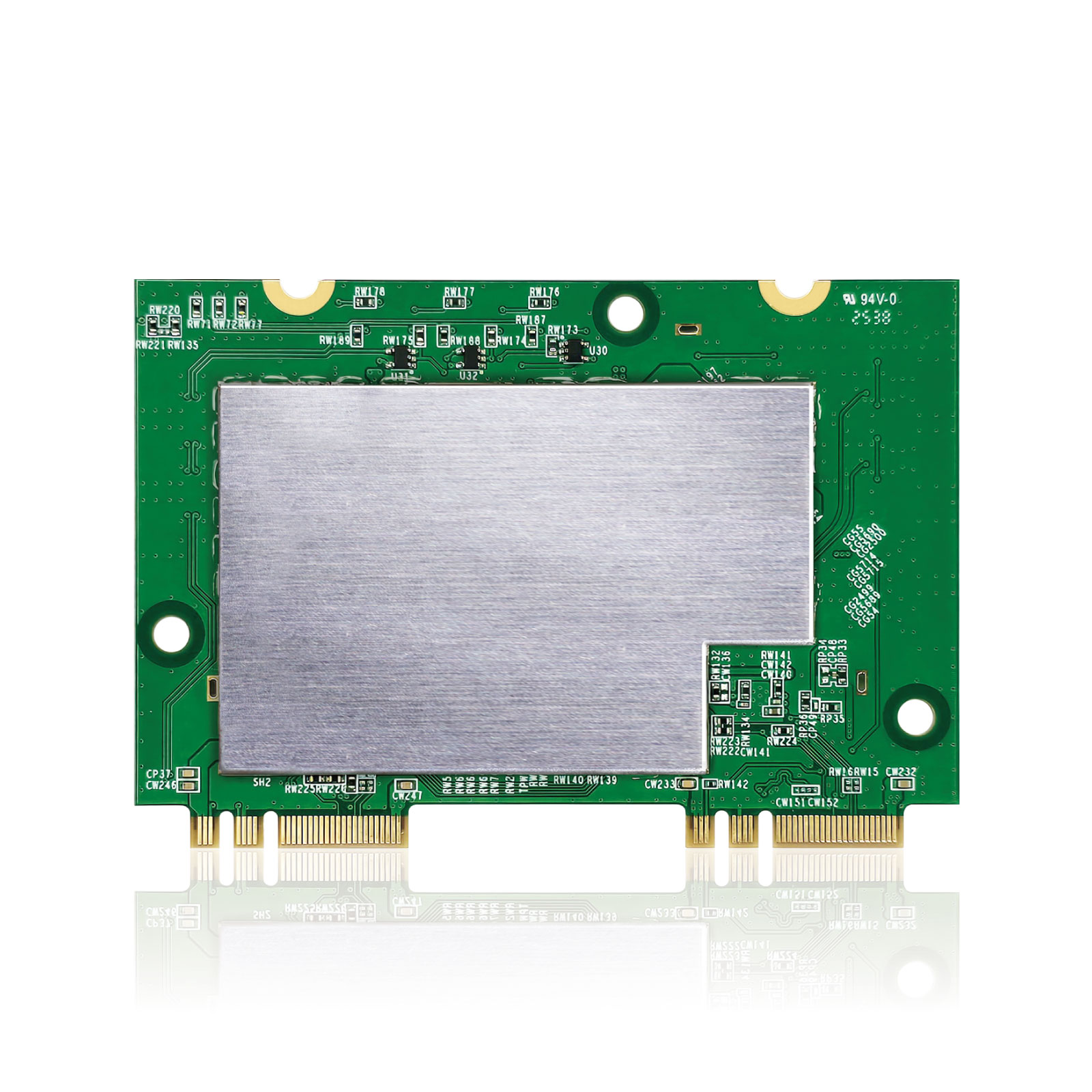
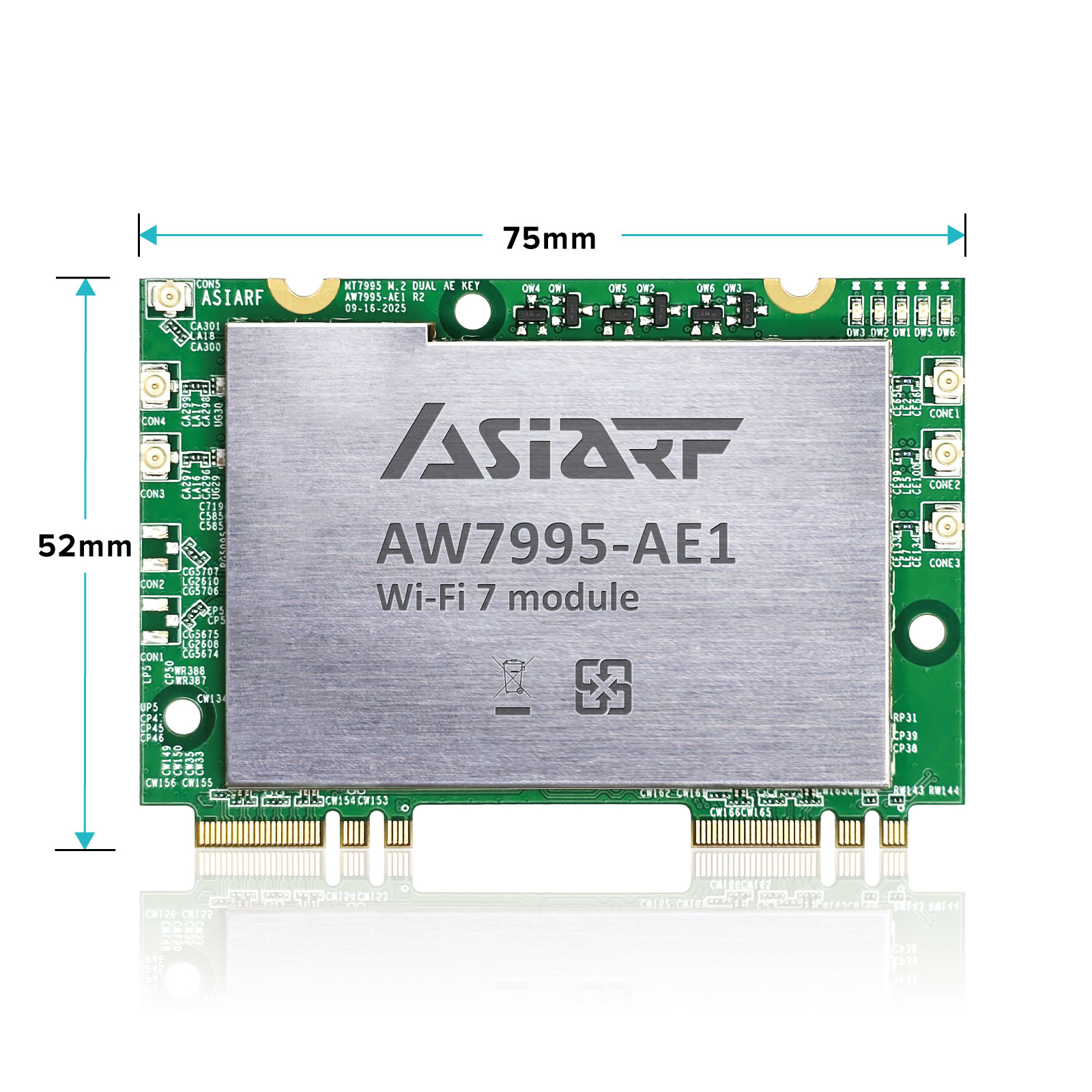
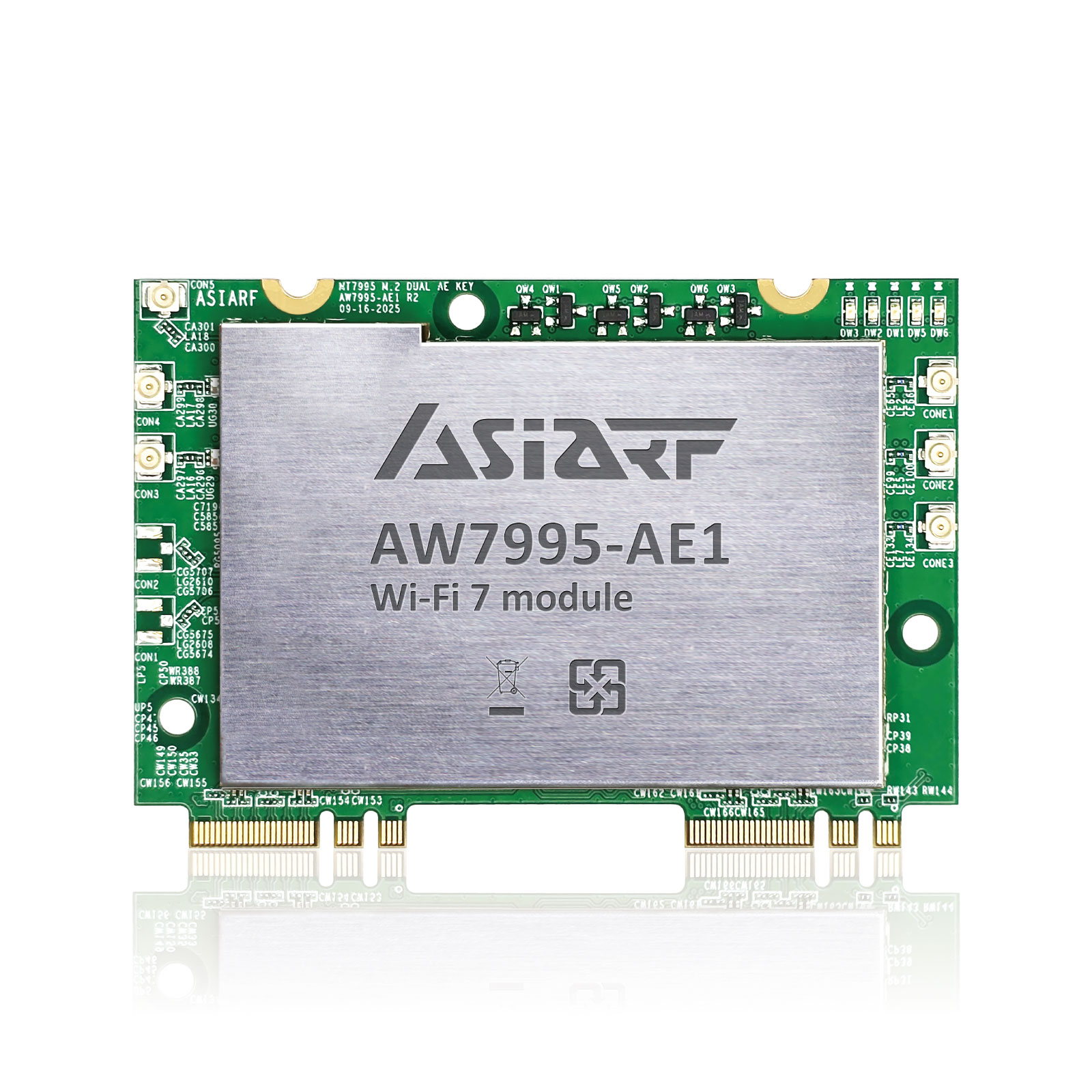
The AW7995-AE1 is a high-performance AP Router Network Interface Card (NIC) leveraging state-of-the-art Wi-Fi 7 technology. Designed for reliable, cost-effective throughput even at extended distances, it features a BE13700 Wi-Fi subsystem that supports tri-band concurrent operations.
Includes 2 Heat Sinks
【Power Consumption】
* Maximum Power Consumption: 18 W
* Typical Power Consumption: 3.4 W (Standby) to 13.7 W (Full Load, iPerf Traffic)
Backed by strategic partnerships with leading chipset providers like MediaTek and Morse Micro, AsiaRF delivers future-ready wireless solutions with strong supply continuity and access to next-generation technologies.
Learn more on our blog : https://asiarf.com/category/blog/Setting New Standards for Sub-GHz Communication!
Or follow us on Linkedin : https://www.linkedin.com/company/asiarf/posts/?feedView=all
Wi‑Fi 7 Capabilities
System Architecture
Reliability
Security & Software
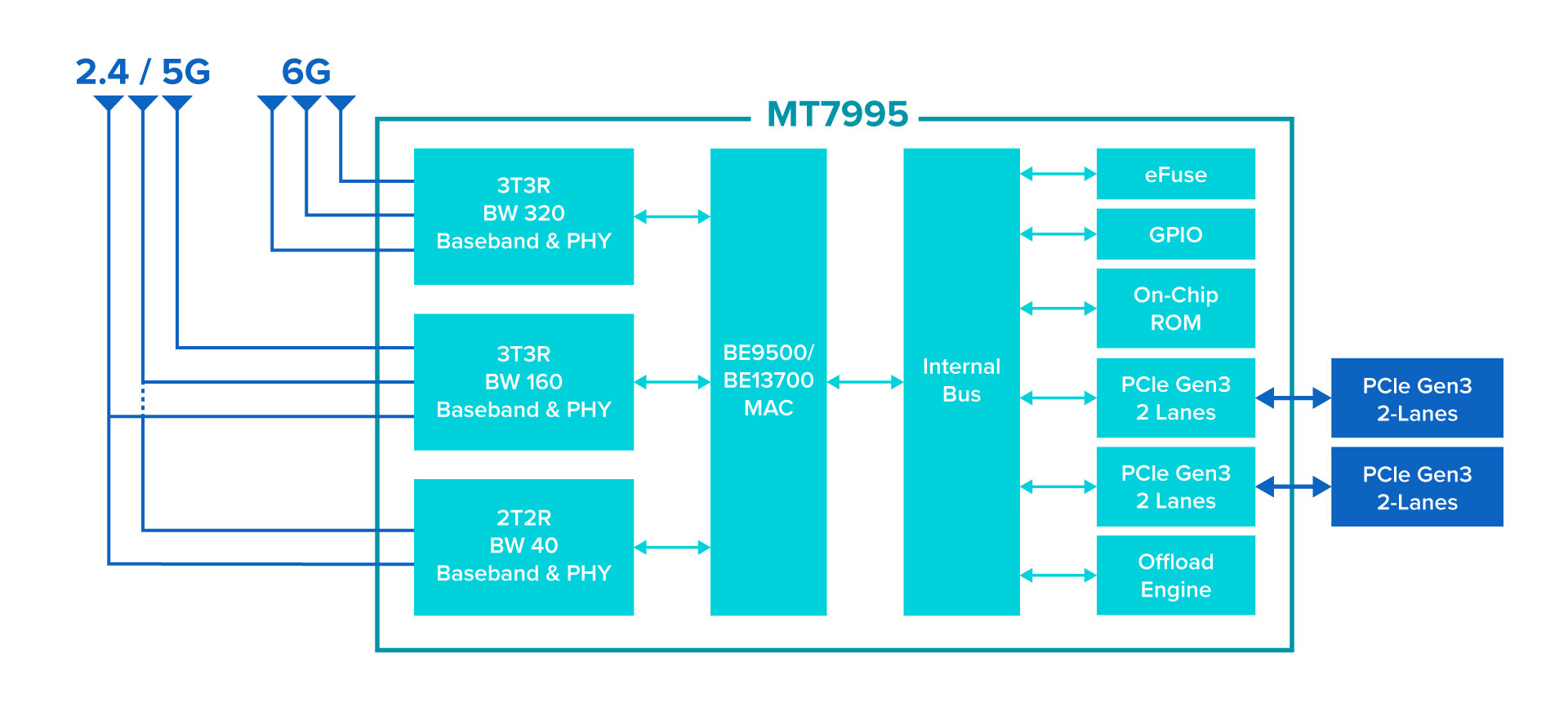
| Chipset | MT7995A with MT7976C/MT7977IA |
| Memory | Embedded SRAM and ROM |
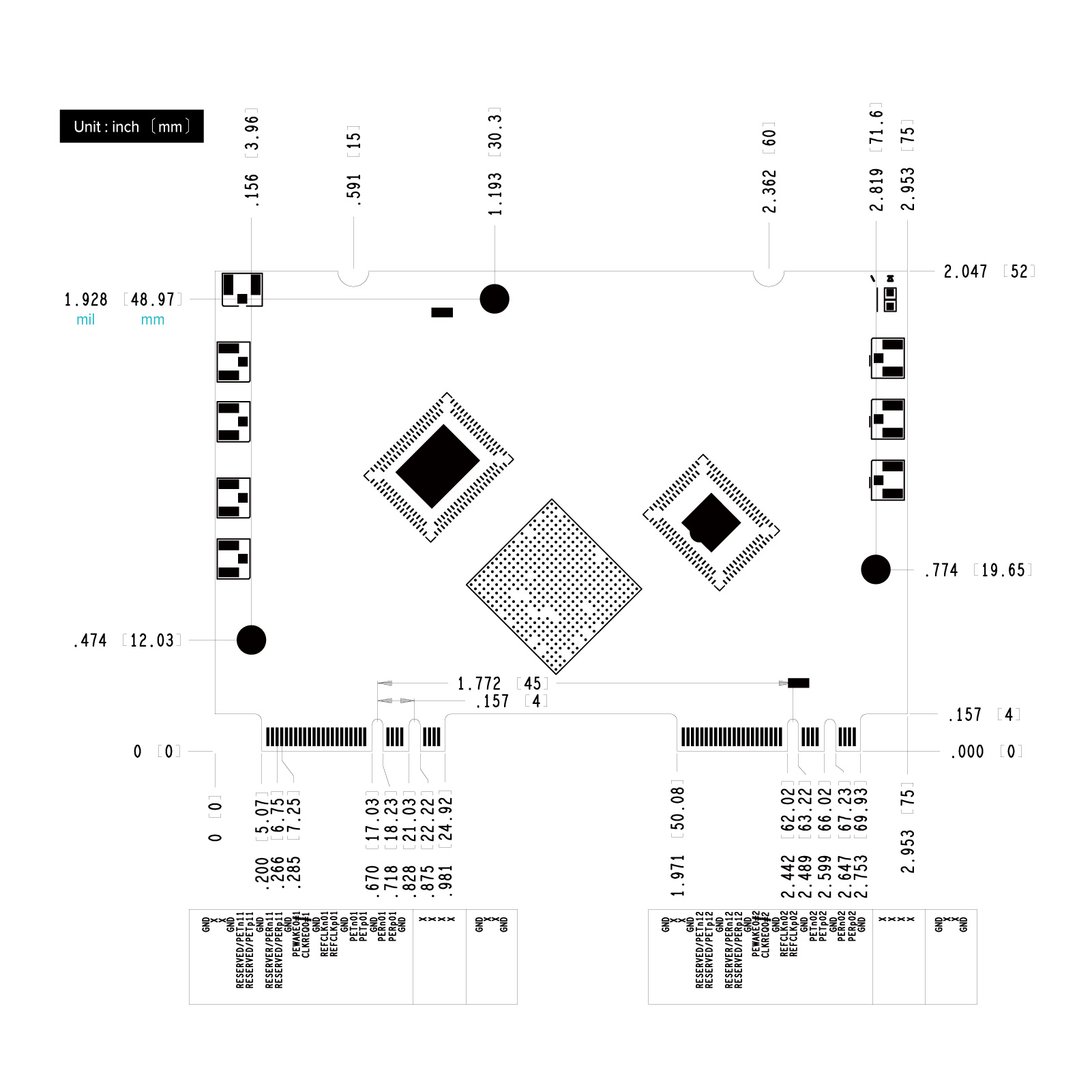
| Host Interface | 2x M.2 A-E Key interface with PCIe 3.0, 2-lane |
| Operating Voltage | DC 3.3V ± 5% |
| Power Consumption | 18W (Max) |
| Wireless | 2.4GHz 2T2R 802.11b/g/n/ax/be
5GHz 3T3R 802.11a/n/ac/ax/be 6GHz 3T3R 802.11/ax/be |
| Frequency Range | 2.4GHz : 2412~2472MHz
5GHz : 5150~5850MHz 6GHz : 5925~7125MHz |
| Channel Spectrum Widths | Supports 20/40MHz at 2.4GHz
Supports 20/40/80/160MHz at 5GHz Supports 20/40/80/160/320MHz at 6GHz |
| Antenna | External Antenna connector (IPEX) x 6 |
| Operating System | Linux |
| Environmental Temperature | Operating:-10°C to 70°C, Storage:-20°C to 90°C |
| Environmental Humidity | Operating: 10% to 90%, Storage: Max. 90% |
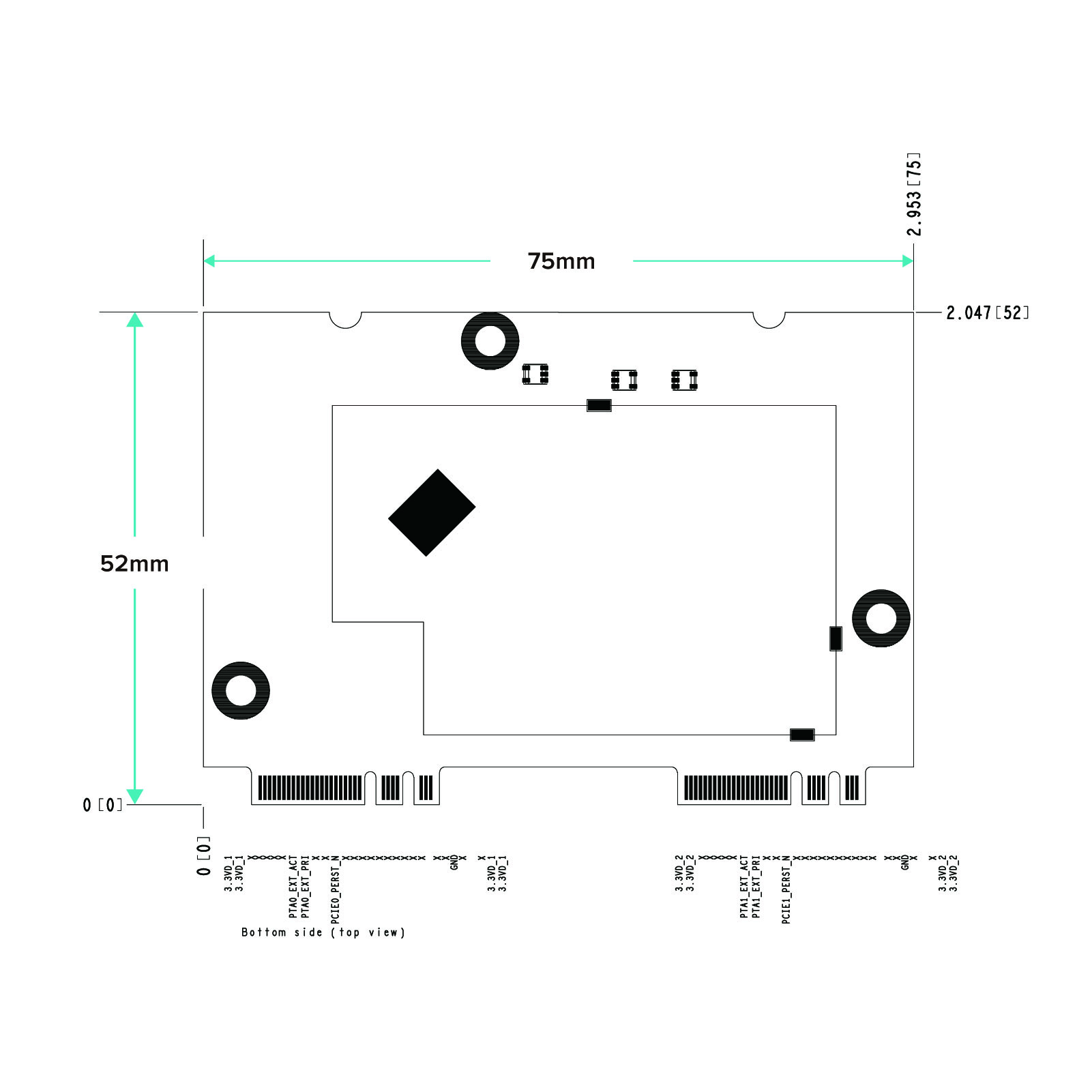
| Dimensions (mm) | (W)75 x (L)52 x (H)5.6 mm (heat sink) |
| Weight(g) | 38 (including heat sink) |
| Certification | TBD |
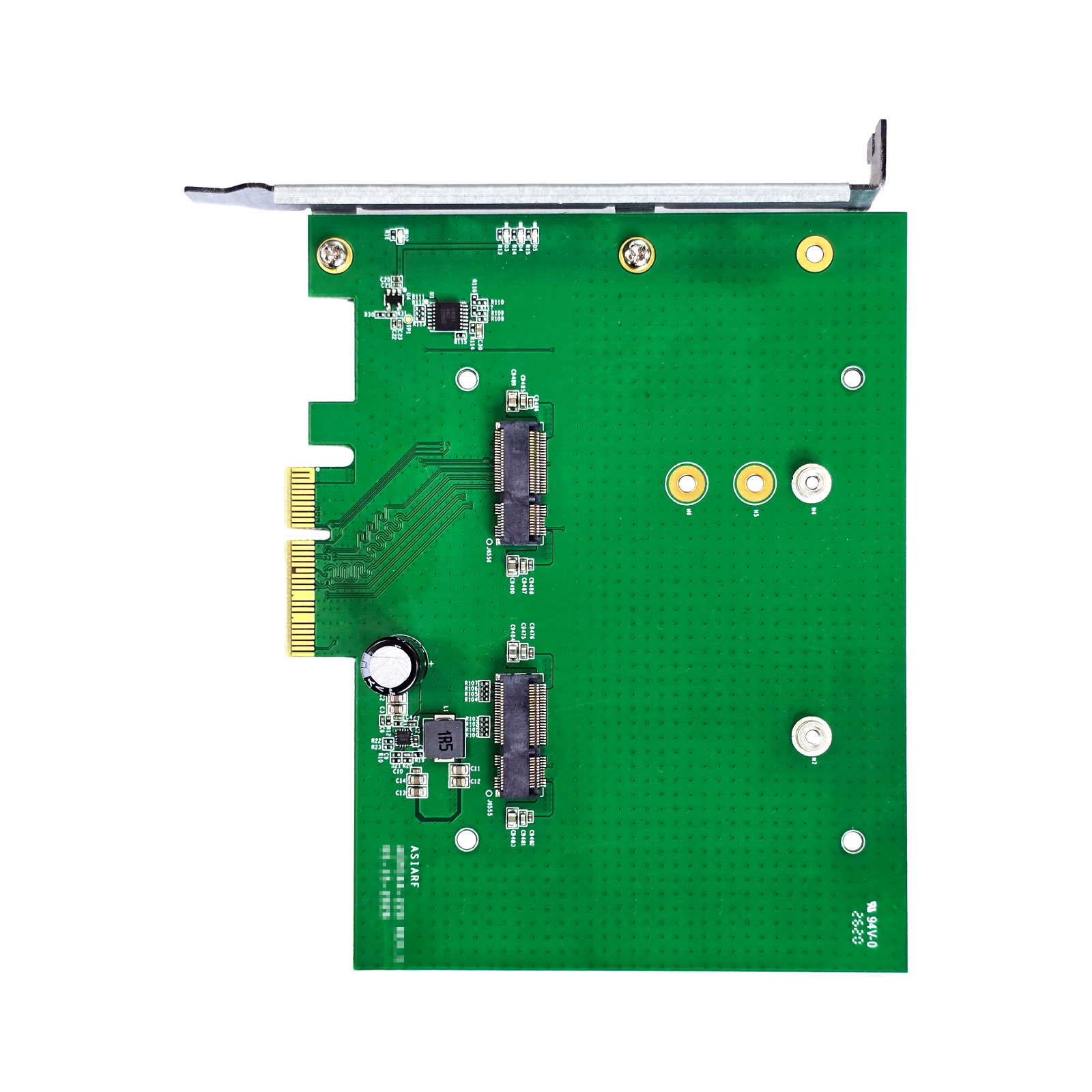
Due to transmission speed and power requirements, we adopted a dual M.2 A-E design.
•The transmission channels can be combined into 1x PCIe 1-lane, 1x PCIe 2-lane, 2x PCIe 1-lane, and 2x PCIe 2-lane. PCIe 3.0 can provide a transmission speed of 8GT/s, so we need at least 2 lanes.
•Since the maximum instantaneous power consumption is close to 18W, we distributed the power source across the two M.2 slots.
| Weight | 0.08 kg |
|---|---|
| Dimensions | 14.5 × 6.5 × 9 cm |